
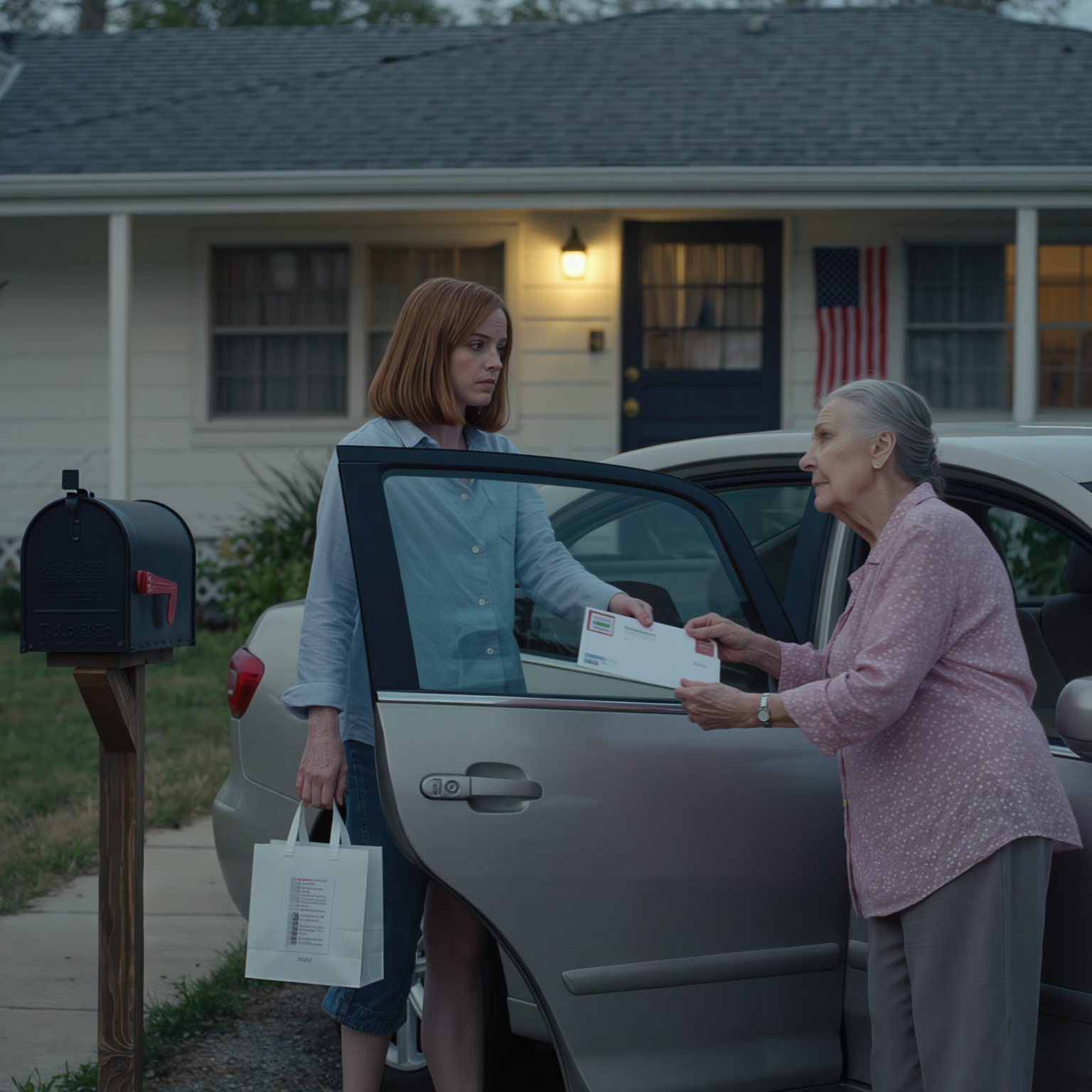
I’m Savannah, and I’m twenty-eight. Yesterday my mother blocked my grandmother’s phone number. Apparently, asking for help with medication costs makes you a burden. In our family group chat, my aunt Rebecca actually wrote that Grandma had “already lived long enough.” If you’ve ever felt like the family disappointment, you’ll understand why what happened next changed everything.
Let me take you back to where this really started, because understanding my family requires understanding one simple truth: I was never supposed to exist.
My mother, Lisa, was nineteen when she got pregnant with me in a little town outside Columbus, Ohio. She’d just graduated from high school, was dating a guy her parents hated, and was completely unprepared for motherhood. I was, to put it delicately, an inconvenience. While other kids grew up with bedtime stories about how desperately their parents had wanted them, I grew up knowing I was a mistake—not the kind of mistake parents eventually rebrand as a “happy accident,” but the kind that derails plans, ruins futures, and creates resentment that never quite fades. Because nothing says unconditional love like being reminded over and over that you ruined someone’s life plan, right?
When I was four, my mother met Robert.
Robert was everything my biological father wasn’t. Stable. Employed. Respectable. He worked for a regional bank in downtown Columbus, drove a sensible sedan, and wore polo shirts tucked into khaki pants even on weekends. He wanted to marry my mother, but he came with conditions. He was willing to take on a woman with a past, but he wasn’t interested in raising someone else’s child.
So my mother made a choice. She chose her future over her daughter. Shocking, I know.
I remember the day she packed my little pink suitcase in our cramped rental house off Route 23. She told me I was going to stay with Grandma Rose “for a little while,” just until “things got settled.” That little while turned into forever.
By the time I turned five, my mother had married Robert, moved into a nice split-level in a manicured suburb forty minutes away, and started her real family. First came my half brother, Tyler, then my half sister, Madison, two years later.
To be fair, my mother didn’t abandon me completely. She visited sometimes, usually around holidays or birthdays, bringing expensive gifts that felt more like guilt payments than expressions of love. She’d take photos of us together—evidence for her friends and coworkers that she was still a good mother to her firstborn. Then she’d leave again, driving back to her picture-perfect cul-de-sac where I didn’t fit. Must be nice to have a family you can just visit when it’s convenient.
My grandmother, Rose, became everything to me. She was fifty-three when I moved in permanently—a widow in a small Ohio town who’d been looking forward to quiet days, church on Sundays, and coffee with friends at the diner off the interstate. Instead, she got a traumatized four-year-old who had nightmares about being left behind. Talk about drawing the short straw.
But here’s the thing about Grandma Rose: she never made me feel like a burden. When I asked why Mommy didn’t want me anymore, she sat me down at her little Formica kitchen table, made hot chocolate with mini marshmallows for both of us, and said, “Sometimes people make choices that don’t make sense to the rest of us, sweetheart. But you’re exactly where you’re supposed to be.”
She worked double shifts at the local twenty-four-hour diner off I-71 to afford things like dance classes, field trip fees, and school supplies. When other kids had parents at school events, Grandma Rose was there in her turquoise waitress uniform, name tag pinned crookedly to her chest, clapping louder than anyone else. She helped me with homework even though she’d only finished eighth grade herself, and she read to me every night until I was old enough to be embarrassed by it.
The rest of my mother’s family treated me like a walking reminder of her poor judgment. They were polite enough at Thanksgiving or Christmas, but the underlying message was always the same: you don’t really belong here. At family gatherings in my aunt’s big house outside Cincinnati, I was the kid who stayed at the children’s table long past the age when my cousins had graduated to the adult table. I was the one they forgot to include in group photos, the afterthought when planning family vacations to Florida or the Smoky Mountains. Nothing builds self-esteem quite like being consistently treated as an optional family member.
My aunt Rebecca, my mother’s older sister, was particularly skilled at making me feel unwanted. She had this way of asking about my mother with fake concern. “How is Lisa doing? It must be so hard for her, having to worry about you on top of everything else.”
The implication was always clear: I was a problem to be managed, a complication in my mother’s otherwise successful suburban life.
But Grandma Rose saw me differently. To her, I wasn’t a mistake or a burden. I was her granddaughter. Period. She celebrated every small achievement like it was a major victory. When I made honor roll, she taped the certificate to the refrigerator and left it there for two years. When I got accepted to a state college near Cincinnati with a partial scholarship, she cried happy tears and took me out for the most expensive dinner we could afford at Applebee’s off the highway.
She never had much money, but she had endless love and an unshakable belief in my worth. When I doubted myself—which was often, given how the rest of the family treated me—she reminded me of everything I’d already overcome. “You’re stronger than you think, Savannah. You’ve been proving that since you were four years old.” That strength she saw in me? I was about to need every bit of it.
By the time I graduated college, the family dynamics had settled into a predictable pattern. My mother maintained just enough contact to avoid looking like a complete deadbeat, but never enough to actually build a real relationship. She sent Christmas cards with generic messages and occasionally liked my Facebook posts, but she never called just to see how I was doing. Because why talk to your firstborn daughter when you can just hit the thumbs-up button on her life updates?
Tyler and Madison, my half siblings, grew up knowing about me but not really knowing me. To them, I was more like a distant cousin who showed up at major family events. Present, but never part of the inner circle. They were polite when we interacted, but there was always this invisible barrier. They had grown up in the same house, shared inside jokes, and had memories I wasn’t part of. I was the sister with an asterisk—the “oh yeah, Lisa has another daughter” footnote in their family story.
Meanwhile, Grandma Rose aged gracefully but stubbornly. Even as she entered her seventies, she refused to slow down. She kept working at the diner until she was seventy-five, claiming she “needed something to keep her busy.” The truth was, she was still worried about money—specifically about having enough to help me if I needed it. Because that’s what you do when you actually love someone: you worry about their future even when you can barely afford your own present.
When I landed my first real job after college—working at a small marketing firm in downtown Columbus—Grandma Rose was prouder than any parent I’d ever seen. She saved every article I wrote, every campaign I worked on, even though she didn’t really understand what “digital marketing” meant. “My granddaughter works in advertising in the city,” she’d tell anyone who would listen, as if I were running Madison Avenue instead of managing social media accounts for local car dealerships and dentist offices.
I moved into a little apartment closer to work, about an hour’s drive from Grandma Rose’s house. It was the farthest I’d ever lived from her, and we both felt the distance. We talked on the phone every other day, sometimes more if something interesting happened or if she was worried about me eating enough vegetables—normal grandparent concerns, unlike my actual parents, who couldn’t be bothered to check if I was still breathing.
She didn’t always understand my generation’s approach to relationships and careers. When I told her I wanted to focus on building my career before settling down, she’d nod supportively, but I could see the concern in her eyes. She wanted me to find someone who would love me the way she did—unconditionally and completely. “You deserve someone who sees how special you are,” she’d say during our Sunday phone calls. “Don’t settle for anything less.”
The irony wasn’t lost on me. The woman who’d modeled unconditional love was the one reminding me not to accept less from anyone else, while the people who should have loved me unconditionally treated me like an obligation they couldn’t quite shake.
Around this time, the extended family created a group text that included everyone—except Grandma Rose and me. I only found out when my cousin Jennifer accidentally added me to a thread discussing Christmas plans.
The message that popped up on my phone made it clear they’d been coordinating family events without us for months. Nothing says family unity like secretly planning gatherings that exclude the people who need inclusion most.
When I mentioned it to Grandma Rose, she just shrugged. “They can have their little club, sweetheart. We don’t need their approval to be a family.” But I saw the hurt behind her eyes. These were her children and grandchildren, and they were systematically cutting her out of family conversations. She’d raised them, supported them through their own messes, watched their kids when they needed help. And now that she was older and might need them, they were pulling away.
That’s when I started paying closer attention.
At holiday gatherings, I noticed how quickly conversations stopped when Grandma Rose entered the room. I saw how they’d make plans for group activities—trips to the outlet mall, dinners at restaurants downtown—but “somehow” forget to mention them to her until it was too late for her to join. It was like watching a master class in passive-aggressive exclusion.
The worst part was watching her pretend not to notice. She’d smile and nod along when they talked about trips they’d taken or new places they’d tried, never mentioning that she hadn’t been invited. She maintained her dignity even as her own children treated her like a burden. Because when you’ve spent your whole life putting other people’s feelings before your own, you become an expert at swallowing your pain.
It made me furious, but Grandma Rose always counseled patience. “People get caught up in their own lives,” she’d say. “They don’t mean to be hurtful.”
I wasn’t nearly as generous in my assessment. These were grown adults who had benefited from her sacrifices for decades. And now that she needed them to step up, they were full of excuses to step back. Revolutionary concept: when someone spends their entire life taking care of you, maybe you return the favor when they get older.
The shift became even more obvious as Grandma Rose hit her mid-seventies. Her arthritis made it harder to drive long distances, so she attended fewer family gatherings. Instead of offering to pick her up or planning events closer to her little ranch house, the family simply stopped expecting her to attend.
When she mentioned this to my aunt Rebecca, the response was telling. “Mom, you know how busy everyone is. It’s just easier this way.”
Easier for whom? Certainly not for the woman who’d spent decades making things easier for everyone else.
I started visiting more often, driving out to her small town every weekend instead of every other week. We cooked together, watched her favorite game shows, and worked in the backyard garden she’d carved out behind her house. She was slower than she used to be, but her mind was sharp, and her sense of humor hadn’t dimmed at all.
“You know what I realized the other day?” she said one Saturday afternoon while we were planting tomatoes under the hazy Midwest sun. “I spent so many years worried about being a burden on my children that I forgot to expect them to act like family.”
That comment stayed with me long after I drove home on I-71 that evening. It was the first crack in her usual optimistic armor, the first time she admitted maybe her children’s behavior wasn’t as innocent as she’d been pretending. I should have known then that worse things were coming.
The new family group text—the one that included Grandma Rose—was created on a random Tuesday in October. I know because my cousin Jennifer, the unofficial tech coordinator for the family, accidentally added me to the initial setup message before quickly removing me and sending a private apology.
“Sorry, that was meant for the family group,” she wrote.
The family group. As if I wasn’t family. But at least they were finally being honest about how they saw me.
I screenshotted that message, not out of pettiness, but because it perfectly captured my place in their world: family-adjacent, useful when convenient, excluded when it made their lives simpler. What I didn’t know then was that Grandma Rose hadn’t been included either. Because apparently being the woman who birthed and raised half these people didn’t automatically qualify her for the inner circle.
For months, I watched from the outside as my extended family became more coordinated in ways that didn’t include us. Birthday parties I only heard about after the fact. Thanksgiving plans that never made their way to Grandma’s phone. Christmas gift exchanges we weren’t told about until someone posted photos from a big living room in the suburbs, everyone in matching pajamas.
The exclusion was systematic, but always maintained plausible deniability. “Oh, we thought someone else had told you.” “We figured you’d be too busy.” “It was so last-minute.” “We didn’t want to put pressure on you.”
Standard operating procedure for people who want to be cruel while maintaining the moral high ground.
Grandma Rose handled it with her usual grace, at least publicly. She never complained or demanded explanations. When she found out about events after they happened, she’d smile and say, “Well, it sounds like everyone had a wonderful time.” Because a lifetime of putting other people’s feelings first teaches you exactly how to swallow disappointment with a smile.
But I started noticing small changes in her. She was eating less, sleeping more, and the cheerful tone in her voice seemed a little forced. When I asked if everything was okay, she insisted she was fine, but I could see through the façade. It’s amazing how quickly you can spot fake happiness when you’ve been performing it yourself most of your life.
The truth was, being systematically excluded by your own children takes a toll, no matter how strong you are.
In December, things escalated. My mother posted a series of photos on Facebook from what looked like an elaborate family party in my aunt Rebecca’s big house near Dayton. Multiple generations dressed up, fairy lights, a banner in the background, champagne flutes raised.

Yo Make również polubił
9 wczesnych objawów cukrzycy, których możesz nie zauważyć
Wczesne objawy ostrzegawcze cukrzycy, których nie powinniśmy ignorować
Ciasto z Budyniem Mlecznym i Sosem Kawowym – Idealna Harmonia Smaków
Miód, oliwa z oliwek i cytryna: naturalny środek na zdrowie wątroby i nerek